
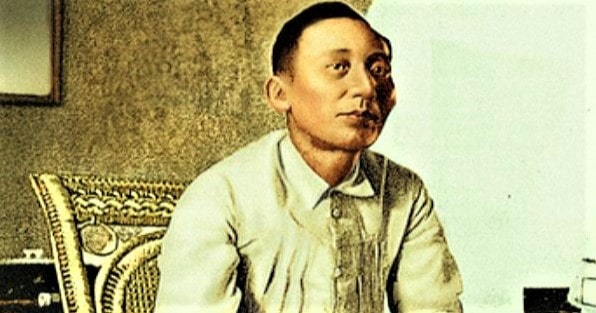
Apolinario Mabini (born July 23, 1864, in Tanauan, Died on May 13, 1903, in Manila), also known as the “genius paralyzed” and referred to as the “brain of the revolution“. He was the first Prime Minister of the Philippines.
Apolinario Mabini was a Filipino politician and theorist who was the Filipino First Constitution of the Philippine Republic (from 1899 to 1901) was written and in 1899 appointed the first Prime Minister of the Philippines. This makes him one of the Philippines’ national heroes.
Quick Facts: Apolinario Mabini
- Born: July 23, 1864, in Talaga, Tanauan, Batangas
- Full name: Apolinario Mabini y Maranan
- Known for: First Prime Minister of the Philippines; the brains of the revolution
- Also known as: Apolinario Mabini y Maranan
- Parents: Inocencio Mabini and Dionisia Maranan
- Died: May 13, 1903, Manila, Philippines
- Cause of Death: cholera
- Education: Colegio de San Juan de Letran, University of Santo Tomas
- Published works: El Simil de Alejandro, Programa Constitucional de la Republica Filipina, La Revolución Filipina
- Prizes and awards: Mabini’s face was on the Filipino 10 peso coin and bill, Museo ni Apolinario Mabini, the Gawad Mabini was awarded Filipinos for outstanding foreign service
- Quotes: ” Man, whether he wishes, works and endeavors for the rights that nature has endowed him with because these rights are the only ones that satisfy the requirements of his own being.”
Early Life of Apolinario Mabini
Apolinario Mabini was born on July 23, 1864, in Talaga, a barangay (district) of Tanauan. His father Inocencio Mabini and his mother Dionisia Maranan lived in poor conditions. A scholarship enabled him to study at a school in Tanauan.
Later he changed schools and came under the care of the well-known teacher Father Valerio Malabanan. He then continued his studies at the Colegio de San Juan de Letran and in 1887 attained a Bachelor of Arts degree and later the title of a professor of Latin.
He received his law degree in 1894 from the University of Santo Tomas. During his studies, he earned his living by teaching Latin, working as a copier at the Manila court, and later as an office worker and court assistant. In September 1892 he joined the Freemasons and took the name Katabay.
In 1893 he was one of the parties that founded La Liga Filipinas, an organization created by José Rizal to unite the Philippines and reform Spanish influence on the country. He dreamed of fighting poverty and escaping the priesthood his mother wanted for him.
In the spring of 1896, he became seriously ill, possibly with polio, which led to the paralysis of his lower limbs. When the revolution broke out that year, he was suspected by the Spanish authority of being connected to this unrest.
He was arrested and detained. The fact that he was unable to move his lower limbs convinced the Spaniards of his innocence. He was then released and transferred to the San Juan de Dios Hospital.
Political Activities
While at school, Mabini supports the reform movement. This conservative group consisted mainly of middle and upper-class Filipinos demanding changes to the Spanish colonial rule but as almost Philippine independence. Intellectual, author, and doctor José Rizal was also active in this movement.
In September 1894, Mabini helped establish the Reformist Cuerpo de Comprimisarios – the “Body of Reconcilers” – which sought to negotiate better treatment for Spanish officials. Pro-independence activists, especially from the lower classes, took the more radical Katipunan movement.
Founded by Andrés Bonifacio, the Katipunan movement advocated armed revolution against Spain.
The Spanish-American War
Between his medical condition and his detention, Apolinario Mabini was unable to participate in the early days of the Philippine Revolution. Even so, his experience and execution of Rizal radicalized Mabini and he turned his keen intellect on the issues of revolution and independence.
In April 1898, he wrote a manifesto about the Spanish-American War, presciently warning other Philippine revolutionary leaders that Spain would probably cede the Philippines to the United States if they lost the war. He urged them to fight for independence to continue.
This paper brought him the attention of General Emilio Aguinaldo, who had ordered the execution of Andrés Bonifacio last year and had been exiled to Hong Kong by the Spaniards.
The Filipino Revolution
The Americans hoped to use Aguinaldo against the Spaniards in the Philippines, so they brought him back from exile on May 19, 1898. On land Aguinaldo, the author of the war manifesto ordered his men to bring him and they had to hand over handicapped Mabini the mountains on a stretcher to Cavite.
Mabini reached Aguinaldo’s camp on June 12, 1898, and soon became one of the general’s primary advisors. On the same day, Aguinaldo declared the independence of the Philippines, with itself as the dictator.
Foundation of the New Government
On July 23, 1898, Mabini was able to speak Aguinaldo from the Philippines ruled as an autocrat. He convinced the new president to build a revolutionary government with a convention instead of a dictatorship.