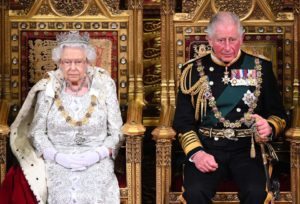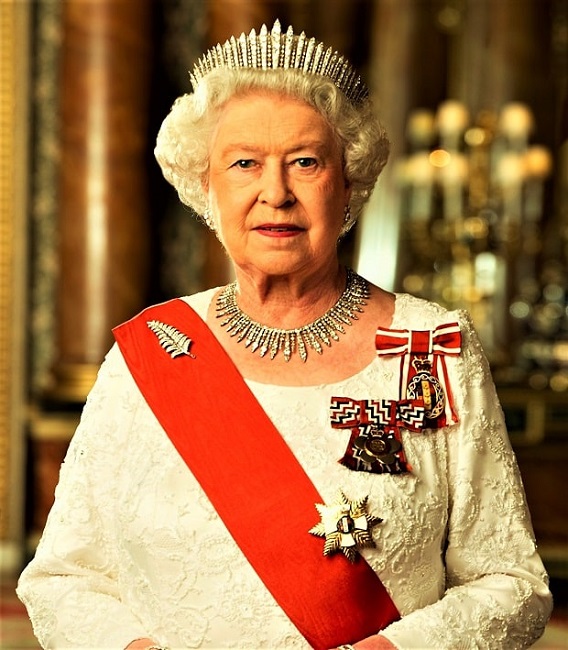
Queen Elizabeth II has been around for almost everybody’s entire lifetime. At 93 years old, she is the longest-reigning British monarch, having taken the throne at the young age of 25 in 1952. So understandably, it’s hard to imagine what will happen when she is no longer with us. Although her father died at the young age of 56, her mother lived to the ripe old age of 101, so longevity is in her blood. But death is undefeated.
Since ascending to the throne in 1952, the mother-of-four has worked as mechanic and military truck driver during World War II, talked politics with 13 prime ministers and 13 US presidents, led 53 Commonwealth countries and welcomed eight grandchildren and eight great-grandchildren.
However, when Prince Philip announced his retirement in May 2017 at the age of 96 with the full support of the Queen, it served as a poignant reminder that the famous couple will not be able – or wish – to undertake public duties forever. With the knowledge that Queen Elizabeth II’s reign will come to an end at some point, here is everything you need to know about what will happen when she passes.
What Is Operation London Bridge
Operation London Bridge has been a code name that referred to the plan for what will happen in the days after the death of Queen Elizabeth II. The plan was originally devised in the 1960s and is updated several times each year. It involves planning from government departments, the Church of England, Metropolitan Police Service, the British Armed Forces, the media and Royal Parks of London. Some critical decisions relating to the plan were made by the Queen herself, although some can only be made by her successor (the current heir apparent is her son, Prince Charles, Prince of Wales), after her death.
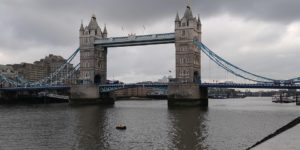
As of early 2017, the phrase “London Bridge is down” was expected to be used to announce the death of the Queen to the Prime Minister and key personnel, setting the plan into motion. The code name Operation London Bridge primarily refers to events that would take place in the United Kingdom. In addition to the United Kingdom, other Commonwealth realms where Elizabeth II acts as a monarch have developed their plans for what will happen in the days after her death. These corresponding plans would run concurrently with Operation London Bridge.
National Mourning Declared In Britain
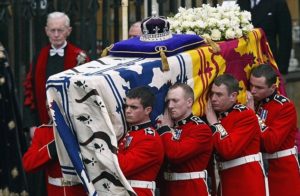
Multiple reports suggest Queen Elizabeth II’s death will lead to a 12-day period of national mourning in Britain. Large crowds visited the Queen Mother’s coffin in 2002, and it’s thought that the monarch’s body will lie in Westminster Hall until her funeral to allow people to pay their respects. Union Jack flags in the UK and around the world will also be flown at half-mast and condolence books will appear in international embassies. The London Stock Exchange will be closed for at least the day of the Queen’s funeral and potentially for several days – potentially costing the economy billions.

The Queen’s body will be taken to Parliament, where she will lie in state in Westminster Hall – like the Queen Mother in 2002 – until her funeral. More than 200,000 people traveled to pay their respects to the Queen Mother and that number is expected to be vastly exceeded in the event of the Queen’s death.
The Royal Family Will Gather Near There Queen Elizabeth II
Death could happen at any moment for any reason, but if Queen Elizabeth II contracts an illness and her physician concludes that death is imminent, then other royal family members will gather around her bedside to pay their respects to queen Elizabeth and say the last goodbye to Queen Elizabeth II.
When the Queen Mother passed away in 2002, she had time to place her final phone calls and even give away some of her horses.