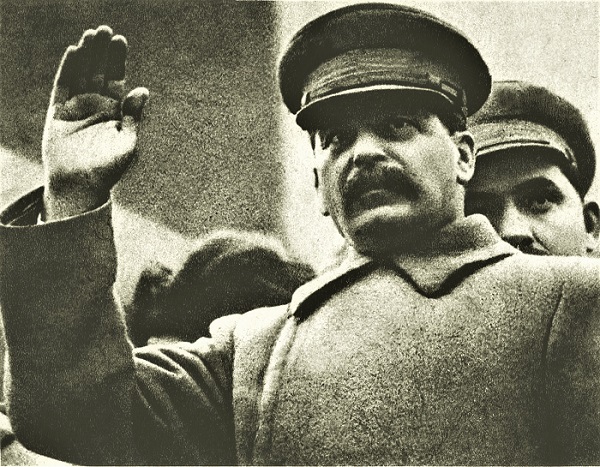
Joseph Vissarionovich Stalin also known as Joseph Stalin. He was born Iosif Vissarionovich Dzhugashvili in the small Georgian town of Gori. That time Georgia was part of the Imperial Russian Empire. Joseph Stalin was born on December 18th, 1878. Stalin was the only son of His parents, Besarion Jughashvili and Ekaterine Geladze. His childhood nickname is “SOSO” Stalin’s father, Besarion Jughashvili, commonly known as Beso. He was a cobbler and an alcoholic.
He producing footwear for the Russian army, and Ekaterine Geladze, a washerwoman. Besarion Jughashvili was not a good dad most of the time he beat his wife and son. Joseph Stalin’s childhood was not easy he face many emotional problems as well as physical abuse from his father. Once Stalin’s father beat him too much that his elbow was broken and it could not be recovered from it throughout his life. Stalin’s mother, Ekaterina, was a very emotional woman she generally protective him. Stalin learned to speak Russian when he was nine years old. Joseph Stalin was raised in an atmosphere of violence.
On February 13th, 1892, the young Stalin eye-witness of the public hanging of two criminals. In 1888 Stalin’s mother managed to enroll him in a church school, in Gori. Joseph Stalin was a brilliant student in school, his effects awarded him a scholarship to the theology seminary in Tiflis. However, the teen was progressively taken with the works of Marx and Engels than the Bible. Proclaiming himself a Marxist and an Atheist in 1901, he joined the Russian Social Democratic Labor Party. There he worked for the revolutionary movement.
Koba The Revolutionary
In 1899 Stalin was ousted from the seminary because of his Marxist leanings. At the time he had adopted the revolutionary nickname called ‘Koba’, For the following two years, he worked as a clerk at the Tiflis Meteorological Observatory. During this time, he got engaged with sorting out strikes and writing articles for communist newspapers. He likewise got talented at making revolutionary speeches. In 1901 he moved to the Georgian coastal town of Batumi. There he was urged by the Russian Social Democratic Labor Party to mix turmoil. He assisted with sorting out a strike at an oil refinery plant, for which he was detained. For this, he spent 1.6 years in jail and was then deported to Siberia.
Throughout the following 12 years, Stalin was arrested multiple times. Every time he managed to escape and return west, regularly going on produced reports. He was arrested for the last time in February 1913 and was exiled to Turukhansk, the coldest piece of Siberia, for 4 years. These years solidified him and made him negative. In 1906, Stalin married his first wife name Kato Svanisze. After a few years his son, Yakov was born. Stalin was always absent, busy inciting unrest. As a result, his wife and son spend little time with him. Kato died due to typhus in December 1907 at the age of 22.
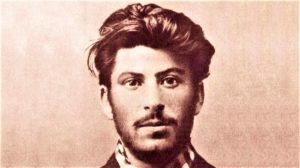
Stalin disregarded his child, who was raised by his in-law. In later years, Stalin requested the capture and execution of much of Kato’s family, including her sibling, Alexander who had acquainted Stalin with Kato. In 1911, Stalin fathered a child by his landowner while living in a remote Georgian town. The kid, Konstantine, never had any contact with his dad.
In 1903 the RSDLP split into two groups; Bolshevik and Menshevik. Stalin was an admirer of the compositions of the progressive Vladimir Lenin and adjusted himself to the Bolshevik reason. His work to undermine the Mensheviks and his association in various thefts to raise assets for the Bolsheviks drew him to Lenin’s attention.
How he get Stalin name, Which means Man of Steel
Lenin was impressed with Stalin, considering him the ‘Wonderful Georgian.’ In 1912 he selected him to the Bolshevik Central Committee. It was right now that Stalin dropped his Georgian alias ‘Koba’ and took on the name Stalin, meaning ‘Man of Steel.’ The outbreak of War in 1914 accelerated the breakdown of Czar Nicholas II’s regulations. extermination on the eastern front and the loss of enormous zones of territory to Germany, along with food shortages and financial hardship negatively affected Russia’s delicate framework.
Fights and strikes developed in force throughout the following three years. At long last, on March 15, 1917, the Russian parliament, the Dhuma, framed a temporary government. That equivalent day, Czar Nicholas renounced. The 304-year-old Romanov line was at an end. After a year Lenin requested the homicide of the whole Romanov family. The provisional Government and the Socialists mainly the Mensheviks now rule in the country. The dual power was necessary as the government needed the support of the Soviets, who felt unprepared to take on full power.
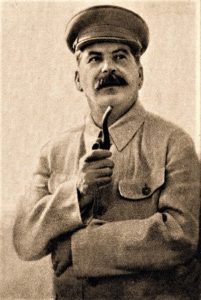
In 1922, Stalin was appointed to the newly created office of the general secretary of the communist party. Though not a significant post at the time. It gave Stalin power over all party member appointments, Which permitted him to construct his base. Lenin was violent. Be that as it may, in late 1922 he suffered from strokes series which seriously affected his capacity to the ruling. In a confirmation which was distributed in November, he castigated Stalin
“Stalin is excessively impolite. This imperfection gets excruciating in a Secretary-General. That is the reason I propose the companions think about a method for expelling Stalin from that post and designating another man in his stead”. A few months later, when Lenin was hospitalized, Stalin telephoned Lenin’s wife, he subjected her to of abuse, referring to her as a ‘syphilitic whore.’ After Lenin’s death, in 1924, Stalin set out to decimate the old party administration and take complete control and the reign of terror began. Stalin presently rethought himself as the conveyor of Lenin’s heritage.
Political Control Taken by Joseph Stalin
After Lenin died, the party was renamed the All-Union Communist Party, The party headed by a collective leadership that included Stalin Leon Trotsky, who had organized the Red Army and still head it Lev Kamenev and Grigory Zinovyev. Stalin’s chief rival was now Leon Trotsky and his friends. the liberal Trotskyites. In 1925, Stalin constrained Trotsky to leave as People’s Commissar for War. Starting now and into the foreseeable future, any who stood in opposition to the Secretary-General was taking a risk with their very lives. At the point when open resistance broke out in late 1927, it’s fomenters, including Trotsky were expelled from the party. Trotsky was exiled to Kazakhstan.