
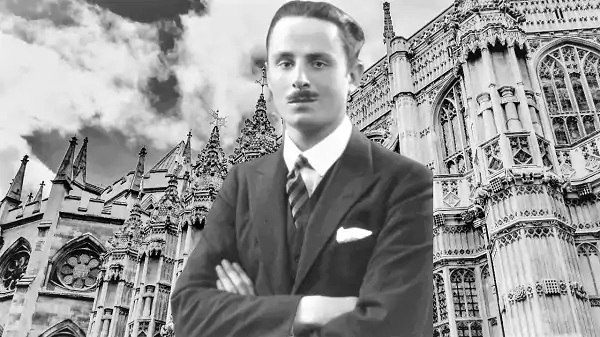
Oswald Mosley (Born on 16 November 1896 – Died on 3 December 1980) was a British politician and best known as the founder of the British Union of Fascists in 1932. Oswald Mosley was handsome, charismatic, known for setting crowds the light with his passionate speeches and aristocrats.
With a huge working-class following, he was perhaps the only politician able to unite voters of both major parties. Regularly tipped as a future Prime minister, it was said that he could one day be Britain’s greatest leader.
But that never happened instead, Mosley chose to take his career down a much more dangerous path. The path marked fascism. As Britain’s leading fascist, Mosley was able to command armies of black shirts. He received funding from Benito Mussolini, was friends with Adolf Hitler.
Had the Nazis conquered Britain, he would have almost certainly been made the ruler of a fascist UK state.
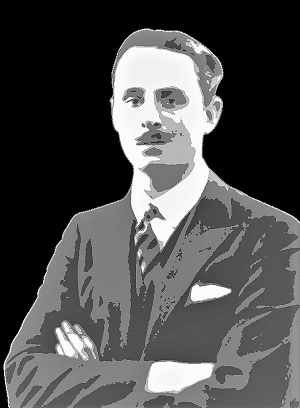
Facts About Oswald Mosley
- Born: 16 November 1896, Mayfair, London, United Kingdom
- Full Name: Oswald Ernald Mosley
- Known For: Founder of the British Union of Fascists
- Oswald Mosley Height: 6 Feet 2 Inches or (1.88 meters)
- Political party:-
Conservative Party (1918–1922)
Independent (1922–1924)
Labour Party (1924–1931)
New Party (1931–1932)
British Union of Fascists (1932–1940)
Union Movement (1948–1973) - Nationality: British
- Wife:-
Diana Mitford (m. 1936–1980)
Lady Cynthia Mosley (m. 1920–1933) - Death: 3 December 1980, Orsay, Essonne, France
- Cause of Death: Parkinson’s disease
- Quotes: “Say ‘boo’ to a liberal, and free speech is on the run.” ― Oswald Mosley
Oswald Mosley Biography
Sir Oswald Mosley was born on November 16, 1896, into an aristocratic family. He was the elder son of Oswald Mosley, 5th baronet, and Katharine Maud Edwards-Heathcote. After his parents separated, Oswald was raised by his mother and paternal grandfather, Sir Oswald Mosley, 4th Baronet.
He was educated at West Downs School, Winchester College, and at the Royal Military Academy in Sandhurst. During World War I, he fought with the 16th Lancers on the Western Front.
He later worked as an observer in the Royal Flying Corps, where he sustained a permanent leg injury in a plane crash. Before the injury had healed, he returned to the trenches and passed out from pain during the Battle of Loos in 1915.
He was assigned to do administrative work and in 1916, when his injury did not heal, he was dismissed as an invalid. He spent the remainder of the war in the offices of the Munitions and Foreign Ministries.
Member of Parliament
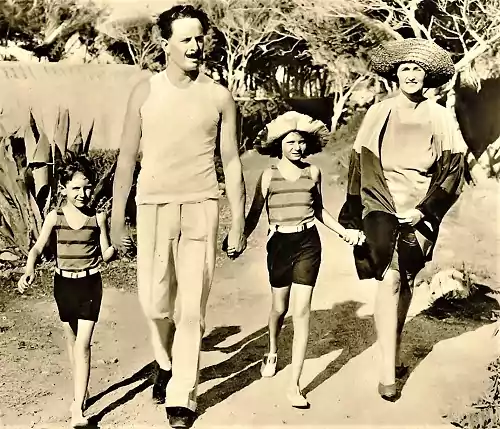
When the war was over he began to deal with politics and in 1918 he was elected deputy in the House of Commons from the ranks of the Conservative Party, becoming the youngest member of Parliament in English history.
In 1920, he married Cynthia Curzon, daughter of the Viceroy of India George Curzon who would help him make his way through the British political arena. In 1921, disapproving of the conservatives’ behavior towards the Irish question, Mosley abandoned the Tories to side with the opposition, while remaining an independent.
Between 1922 and 1923, without being formally endorsed by any party, he confirmed his parliamentary seat, and in 1924 he joined the Labor Party and, through thick and thin, remained affiliated with the party (sometimes as an “official” candidate, sometimes as “independent”) until 1930.
Around 1925, after the fall of the government, he proposed himself for the role of prime minister but his appeal went unheeded and new elections were held: Mosley showed up in the difficult college of Birmingham, where the conservative Neville Chamberlain defeated him for only 77 votes.
The serious political crisis that raged in Britain in the twenties allowed Mosley not to stay out of Parliament for too long: he returned there on 21 December 1926, being elected to the Smethwick college.
Government Office
Throughout the 1920s Oswald Mosley and his wife Cynthia presented themselves as supporters of Fabianism and both worked within various journalistic and political organizations controlled by the Fabian Society.
At the end of the political consultations of 1929, won by Labor, Mosley concluded an electoral agreement with Prime Minister Ramsay MacDonald and for a year was his minister without portfolio, as chancellor of the Duchy of Lancaster.